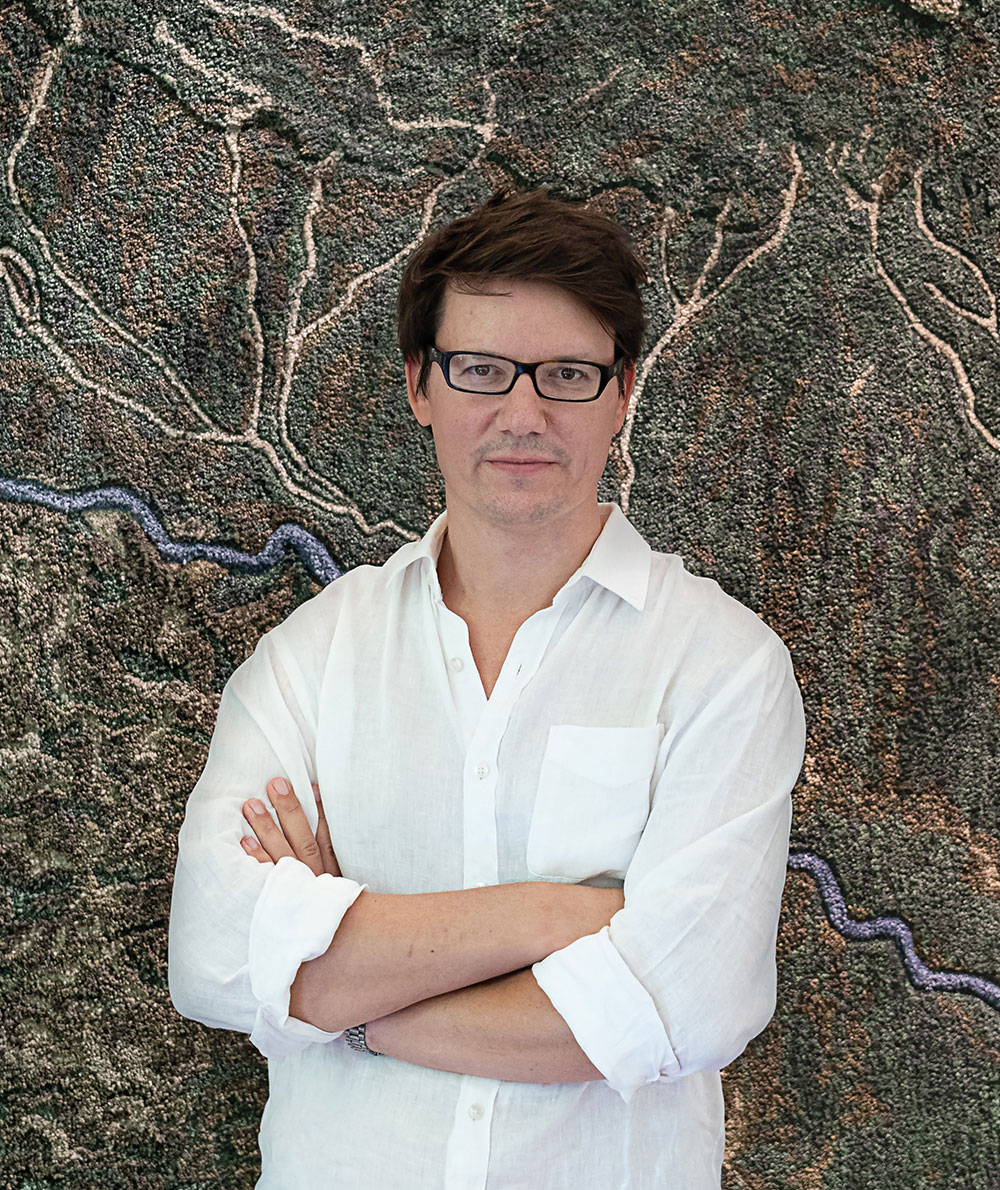
After completing his Business Management studies at Madrid Complutense University, he begins his training in product design at the Instituto Europeo di Design in Milan (1999-2000) and later graduates with honours from Central Saint Martins College of Art and Design in London (2000-2004). In 2004 he starts up his own studio in Barcelona where he designs LA FLACA lamp, winner of the Design Plus Award (Frankfurt) and DELTA Awards in Barcelona. In 2009 he moves his studio to Madrid where he also teaches at the Instituto Europeo di Design and is a member of the Executive Board of DIMAD (Asociación Diseñadores de Madrid).
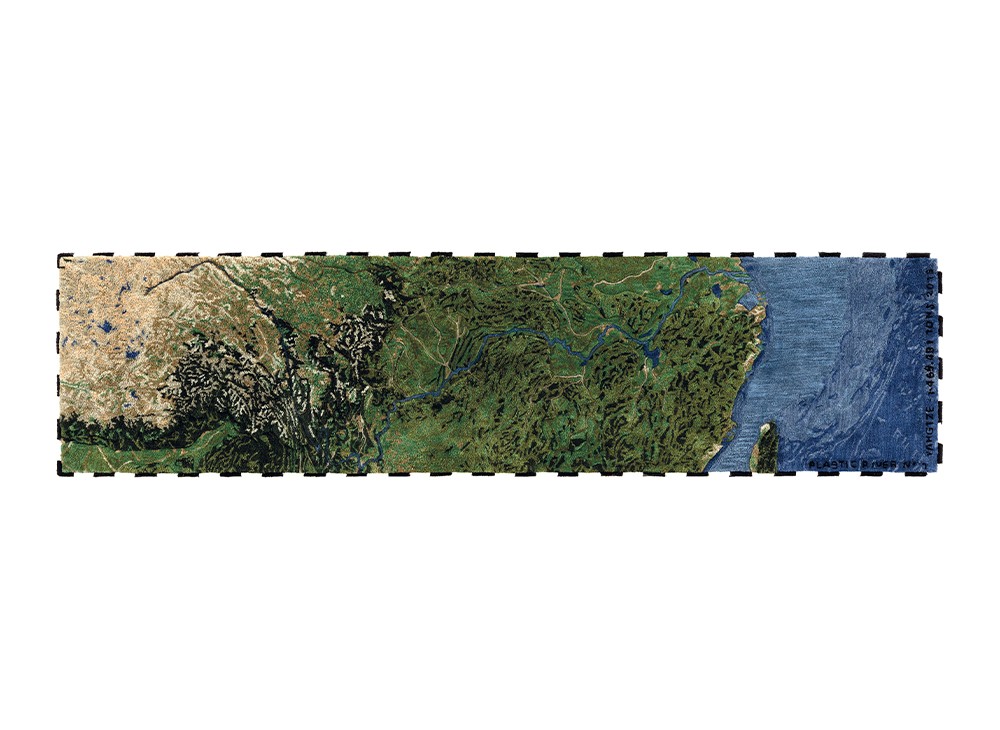
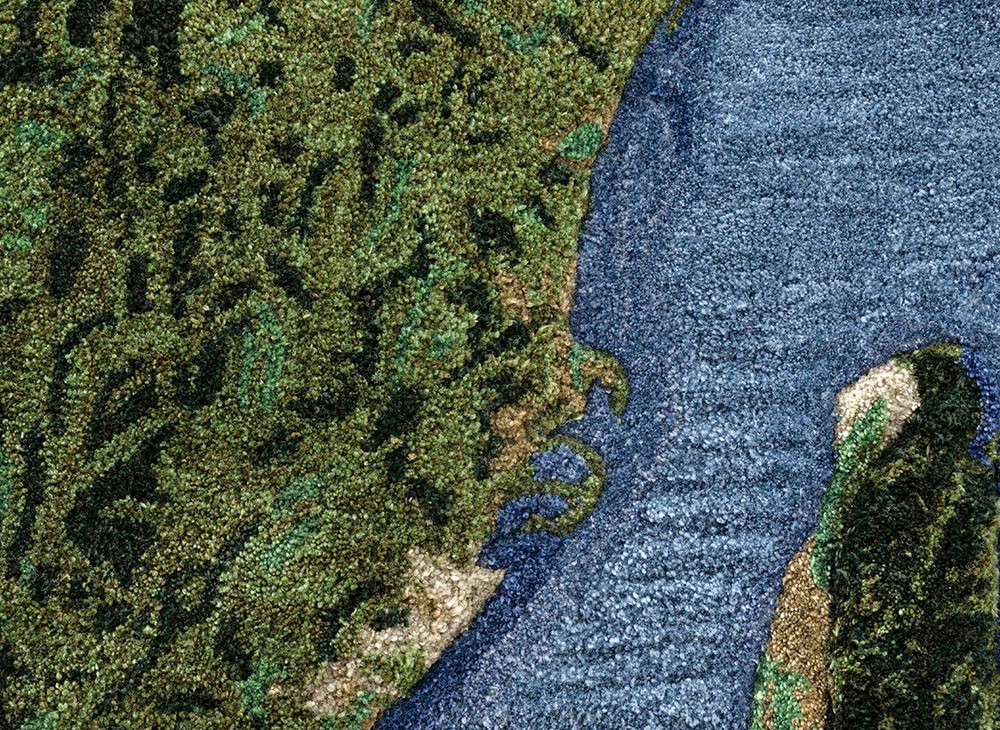
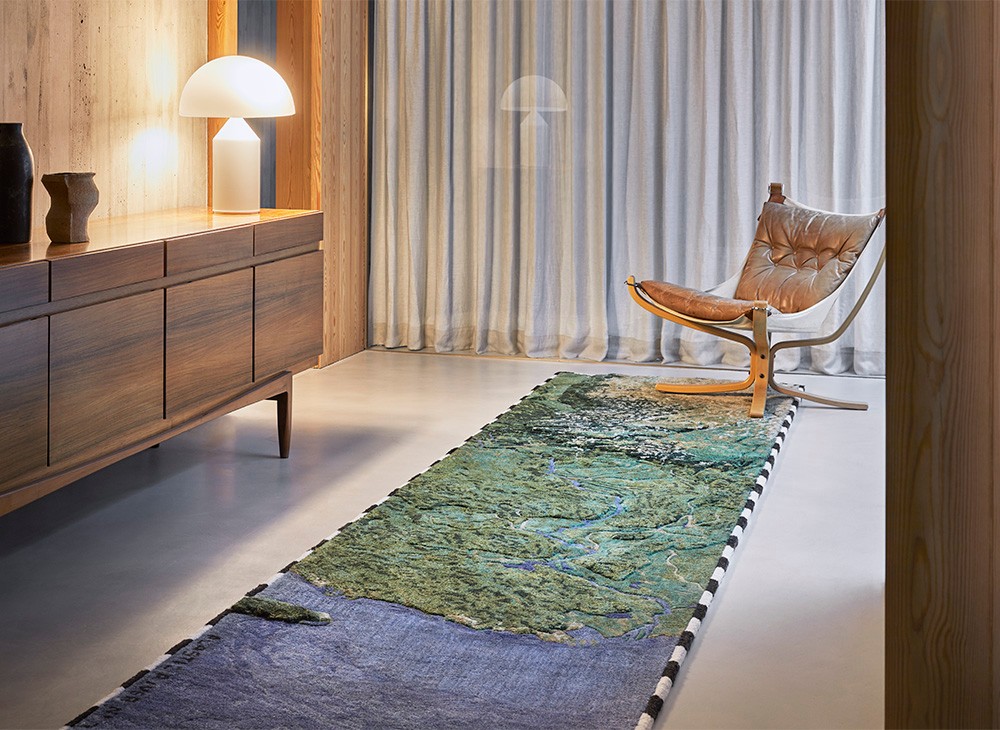
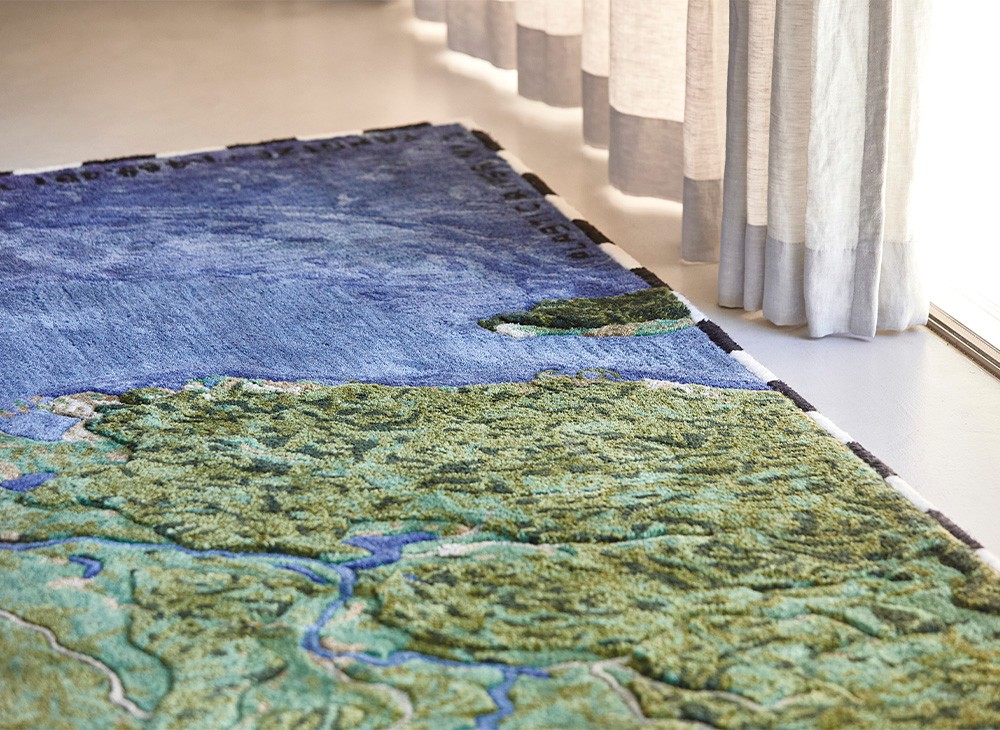
Designer Álvaro Catalán de Ocón wanted to draw attention to this fact with this collection, made up of three other models, which represent aerial views of a part of the course of four rivers in this situation: Niger, in West Africa, and Ganges and Indus, in India. It is precisely artisans from this country who handcraft each of the Plastic Rivers models, as a call from the world of craftsmanship against the uncontrolled plastic industry. In their manufacture, as expected, yarns made from 100% recycled and recyclable PET are used. To achieve the different volumes of the unique topography of each place, the Plastic Rivers rugs are made using the hand-tufted technique, which allows for the execution of different thicknesses in a single piece. While Yangtze has an elongated format, like a runner rug, Ganges and Indus are rectangular, and Niger is round. All models are large format.
Manufacturing technique
Hand Tufted
Material
Fibre composition: 100% recycled PET. Back: 100% recycled PET
Sizes
100x400 cm / 3'3"x13'1"
Approx. total height
8 mm / 0.31" - 18 mm / 0.71"