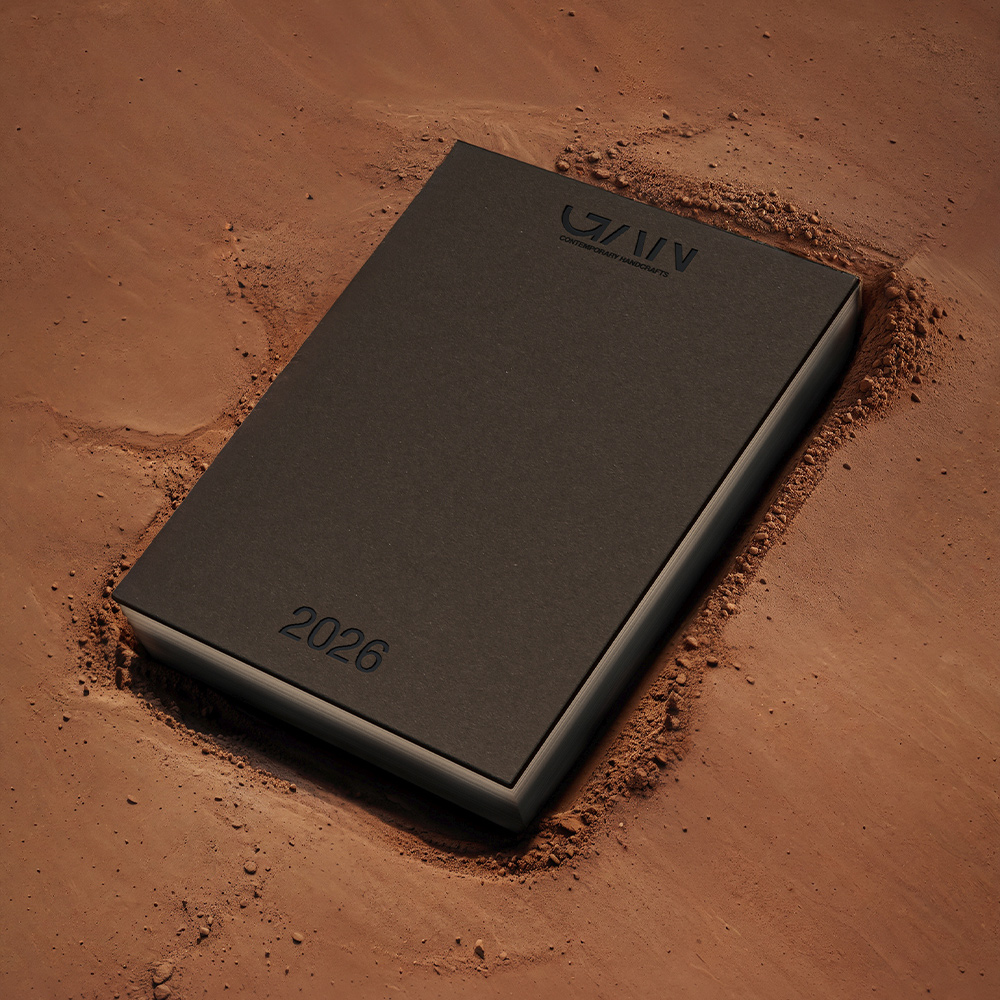
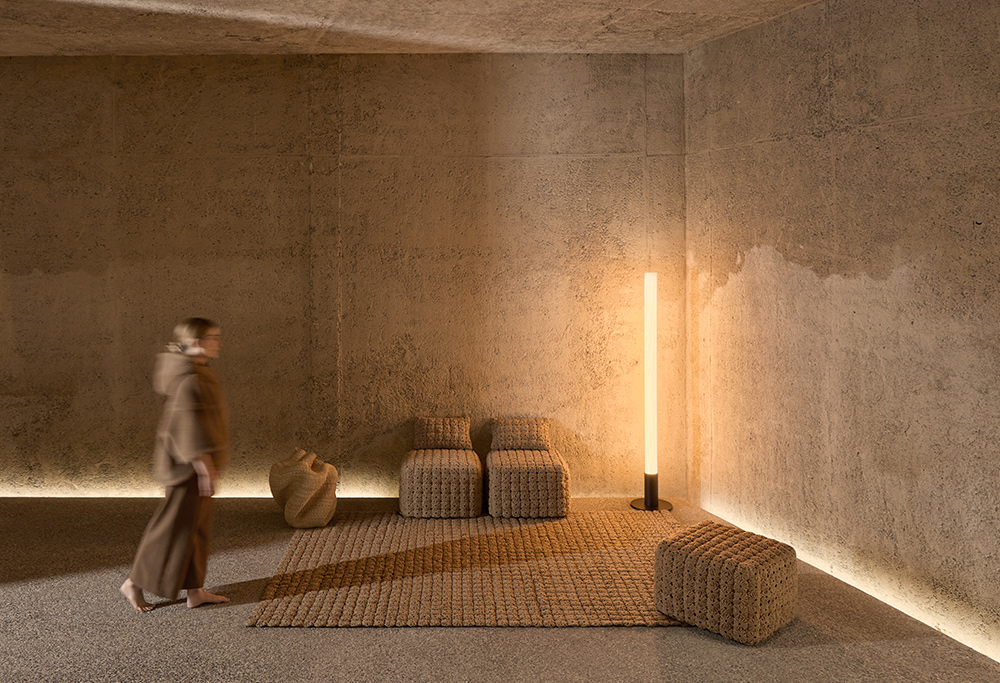
With its 2026 novelties catalog, GAN wanted to pay tribute to vernacular values through a photographic journey through the nooks and crannies of moving subterranean architecture, which interlocks with the terrain, imitating nature through construction. The volume presents GAN's novelties integrated into this unique architecture of dark and awe-inspiring environments, seeking complicity between the sensitivity and delicacy of its architecture, both native and innovative, and that of the firm's contemporary textile craft collections.
Many architects have explored the sensory possibilities of building underground, pursuing solitude, silence, contemplation, and mystical environments, primitively connected to nature and the elements. With the 2026 catalog, GAN has sought to appeal to that indecipherable evolutionary condition by which human beings continue to marvel at the vernacular; to that wild instinct by which we find peace in nature; to that sensory capacity that connects us with the earth and the elements. Because perhaps therein lies the link with craftsmanship, through a biological memory that is much older than our here-and-now self.
To recreate both this primitivism in the catalog's visual narrative and the artisan processes that characterize GAN, the catalog features a textured hardcover in deep earthy tones and a visible stitched spine, seeking to establish a connection with the manual work done by the firm's artisan teams in India.
Download here.
What's New for 2026
GAN's 2026 catalog features five new collections signed by Bodo Sperlein, José A. Gandía-Blasco Canales, Romero & Vallejo, Sandra Figuerola, and Terhedebrügge Studio. Some collections explore biophilic designs, while others are more graphic, geometric, and structured. But each, in its own way, demonstrates GAN's spirit of taking contemporary craftsmanship a step further, experimenting with multiple artisanal techniques, new execution methods and technical complexities, the hybridization of executions, drawing patterns, and the mixing of different natural and recycled fibers.
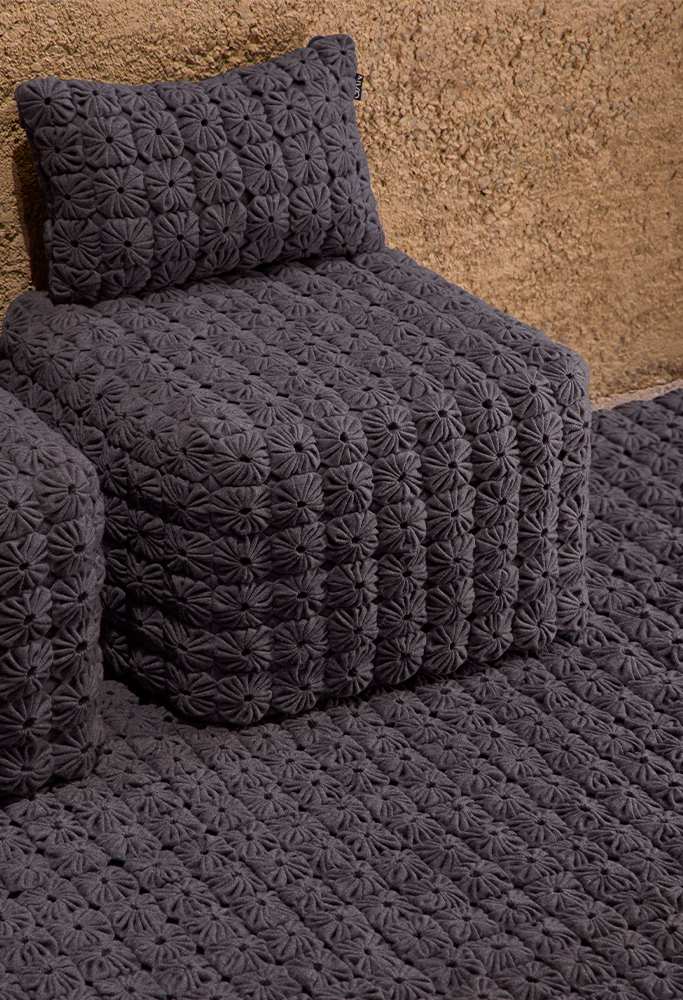
MOMOS is a collection whose inspiration emerged in Brazil, its design in Spain, and its execution in India, establishing a link between crafts from different parts of the world. Its inspiration arose more than twenty years ago during a trip to northern Brazil, when José A. Gandía-Blasco Canales was struck by a local textile craft in the state of Maranhão.
Since then, that curious fabric, whose structure resembles the geometry of butterfly eggs, remained in his memory until, along with the embroidery skill of the artisans at the GAN Women Unit, he managed to reinterpret and translate it three-dimensionally into the design of a collection of rugs, poufs, and cushions.
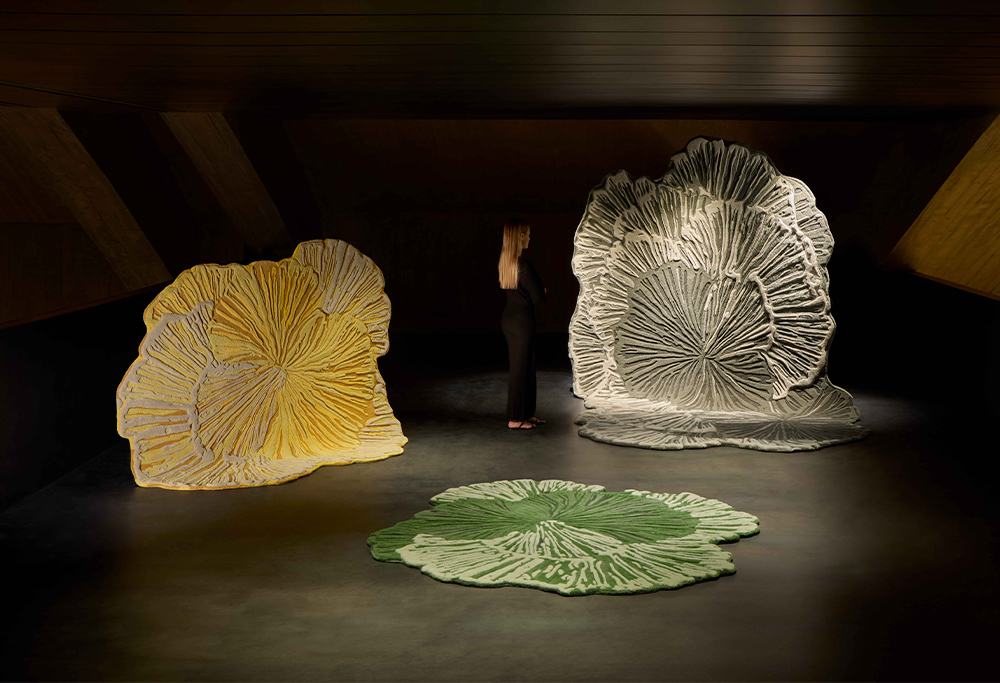
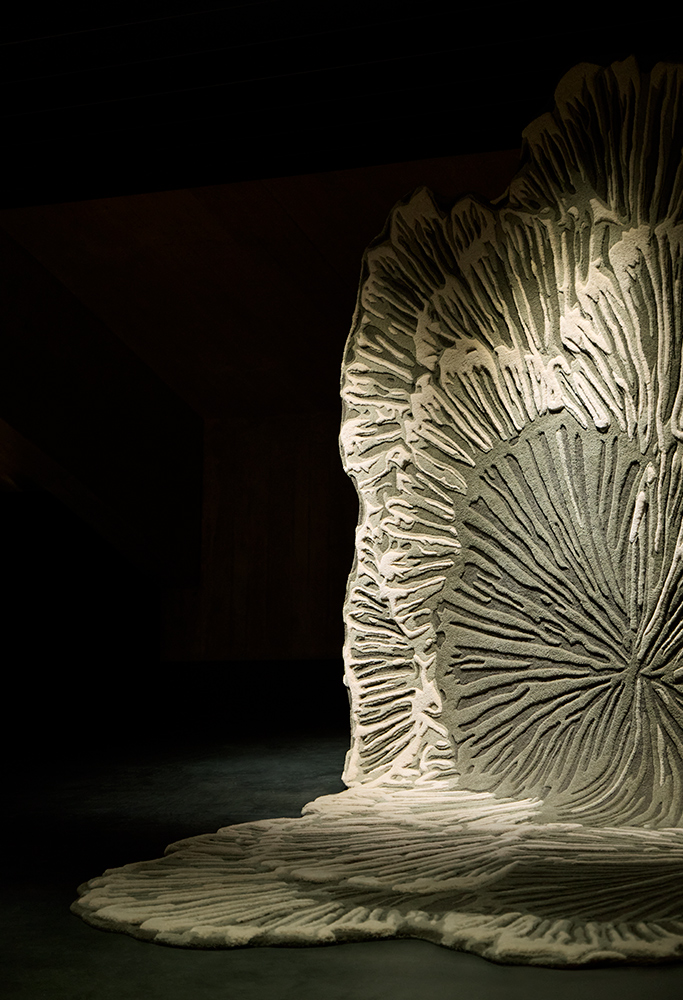
Meanwhile, the BOTANICA collection is the result of the first collaboration between GAN and Bodo Sperlein, known for his exuberant and sensory way of integrating artisanal production processes with organic and contemporary designs. BOTANICA rugs feature a biophilic design inspired by the organicism, movement, and expressiveness of nature.
Their high level of detail in pattern representation, their illusion of movement, and their pronounced volumetric effect have been achieved through a meticulous selection of each color's nuances, different pile heights, and the use of two artisanal techniques: hand-tufting and carving.
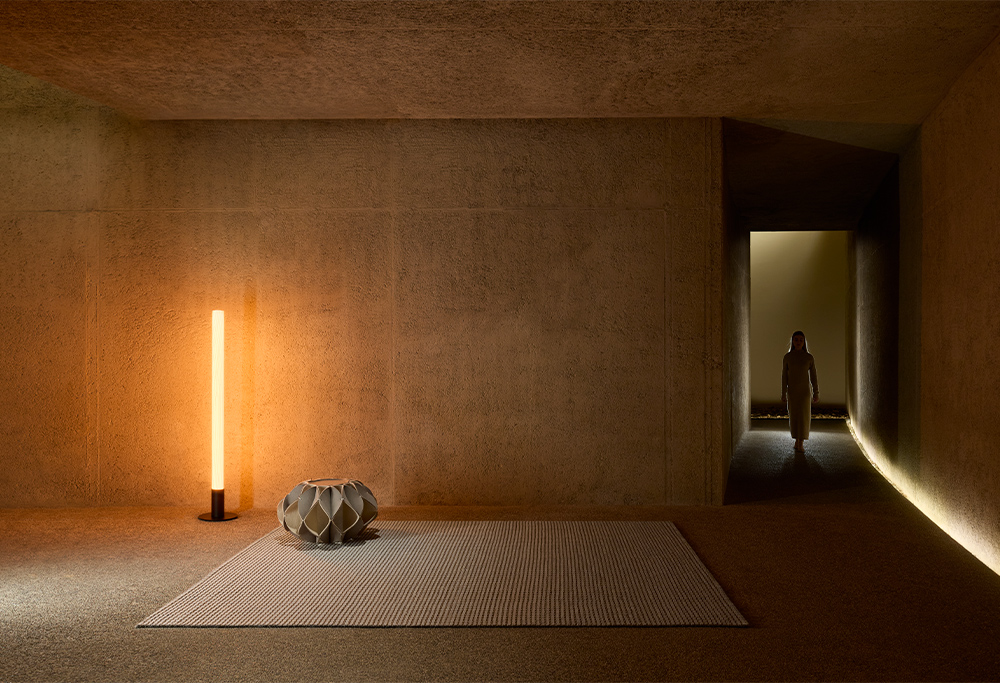
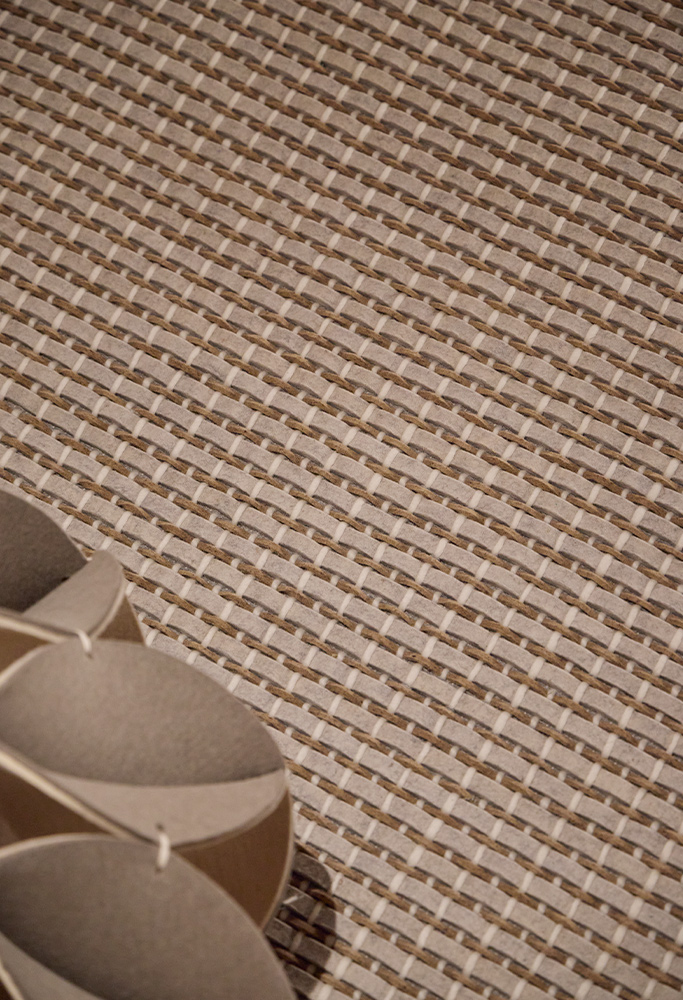
TRAMAS is a design by the Romero & Vallejo studio that explores the deconstruction of warp and weft, blending different types of materials in the same piece to create a new kind of weave, with a different production process, different materials, and a novel aesthetic.
This entire process has been translated into a composition with a very graphic character, generating a visual effect of depth and three dimensions. The meticulousness required for its execution, fusing felt with different wools, means these rugs can only be made with the hand loom technique.
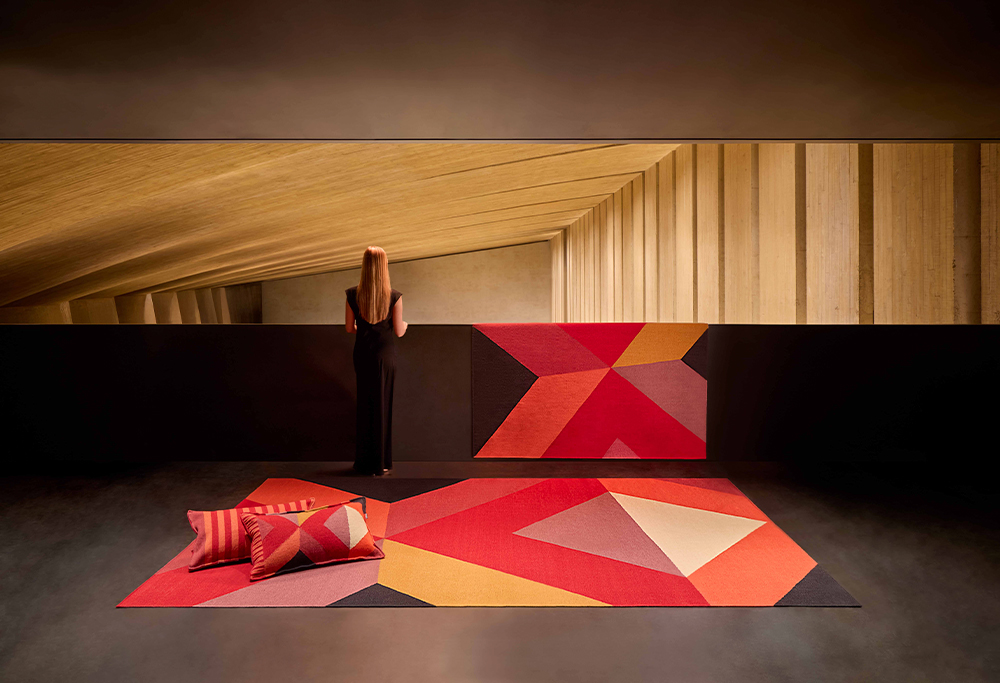
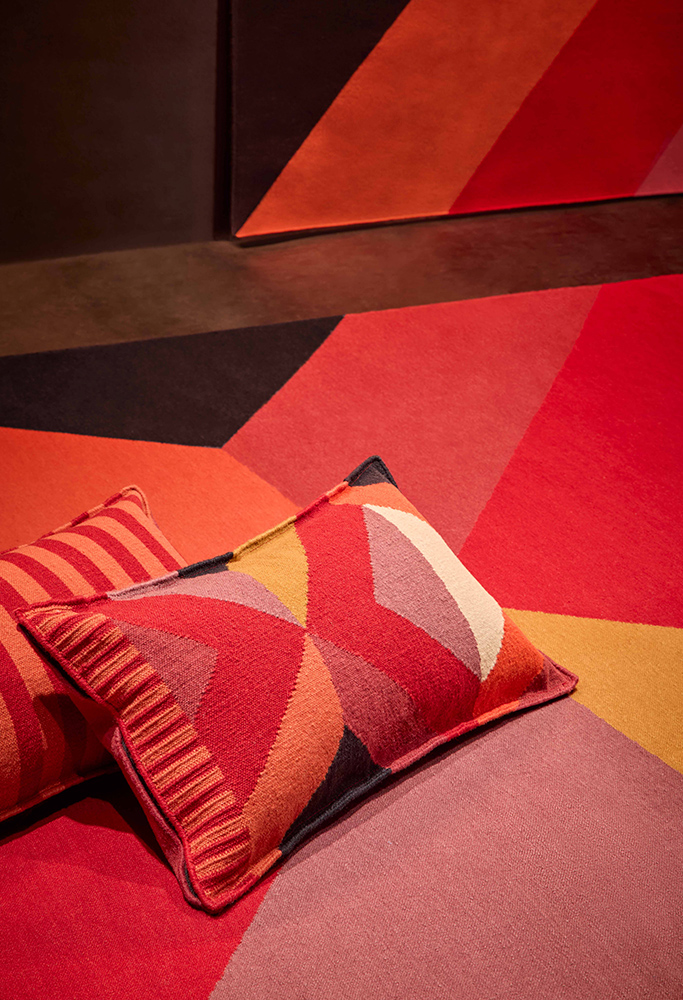
The new collection of kilims, VANGUARDIAS, is an explosive design by Sandra Figuerola that aims to break with prevailing schemes of sobriety. Its pattern is an explosion of geometry and color, with oversized shapes, bold strokes, and intense colors.
With the design of the VANGUARDIAS kilims, Sandra Figuerola sought to create an element that could become the focal point of a space, like a work of art. A simple piece that, despite being a very accessible resource, was capable of generating a great visual and spatial impact.
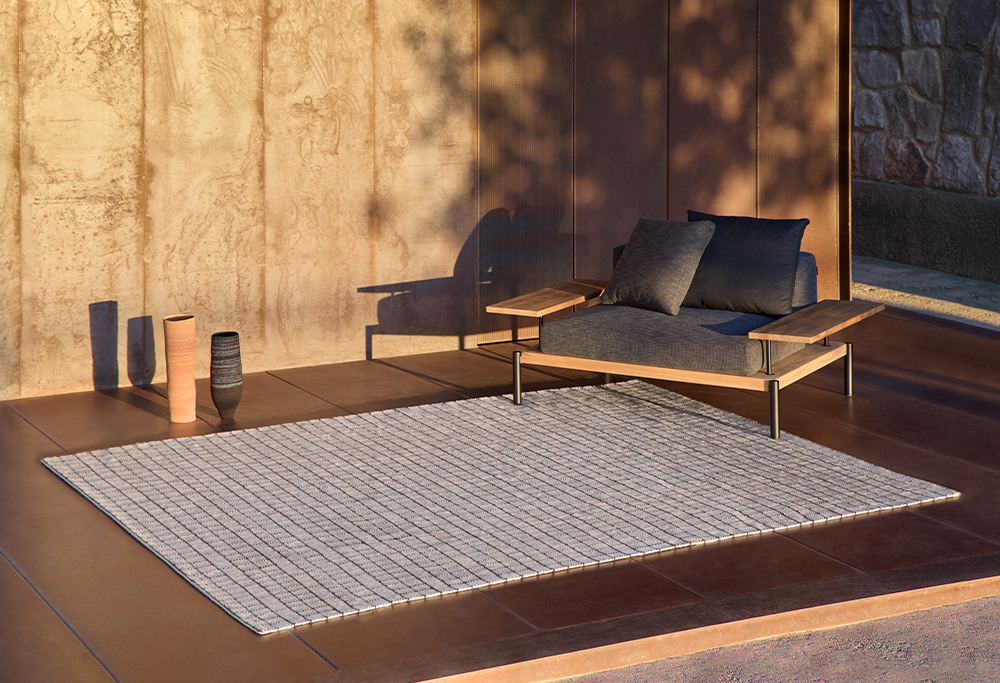
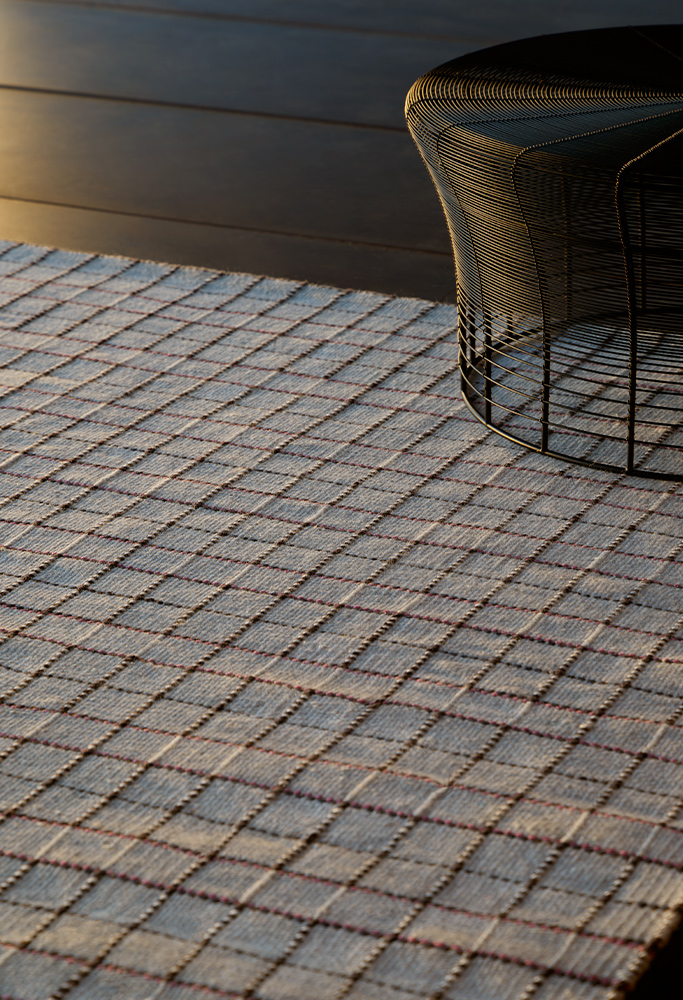
Finally, the RETI collection is a proposal from the German studio Terhedebrügge with a notorious graphic inspiration, as it recreates a grid transferred to a rug. Its appearance can recall the grids used in graphic design for editorial compositions, but also that of an urban layout or a notebook.
RETI is also a collection made with recycled PET fibers, which GAN has explored how to adapt to the hand loom technique, making these rugs suitable for both indoor and outdoor environments.
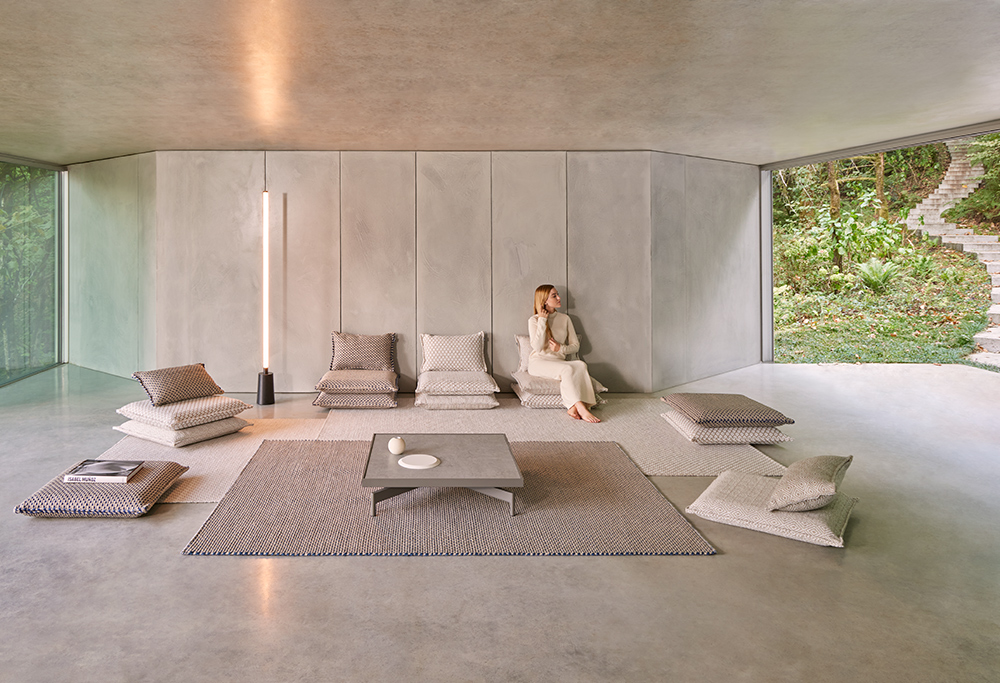
Outdoors is the new indoors
The quest for a stronger connection between indoor and outdoor spaces is one of the most significant trends in contemporary architecture. This movement aims to connect spaces by blurring the lines between inside and out, both visually and spatially.
The very elements that define these new spaces are adapting to this new fluidity between indoors and outdoors, including textiles. Designs are becoming more versatile, sophisticated, and transformative for spaces, now crafted with new fibers that are resistant to outdoor placement.
GAN's 2026 novelties already address this trend through proposals that create a new way of both relating to and designing indoor and outdoor spaces, with a rich aesthetic and materiality capable of making an environment feel much more intense and evocative.
Download here.
CREDITS:
CREATIVE DIRECTOR & PROJECT MANAGER
ALEJANDRA GANDÍA-BLASCO
ART DIRECTION
GAN STUDIO
PHOTOGRAPHIES
ÁNGEL SEGURA
HÉCTOR CAMPOS
COPY
TACHY MORA
EDITORIAL CONCEPT & GRAPHIC DESIGN
GAN STUDIO
SPECIAL THANKS
LZF
CRISTINA VALLEJO
IRIA MARTÍNEZ
PRINTED IN SPAIN
FERNANDO GIL S.A.